
Nvidia, Oracle, CoreWeave Stocks Sink After OpenAI's Revenue Turns Out $20 Billion Lower
OpenAI clarified to investors that its annualized revenue run rate is roughly $50B, down from earlier partner-grossed estimates of $68B. The revised figure triggered an immediate pullback across Nvidia, Oracle, and CoreWeave.
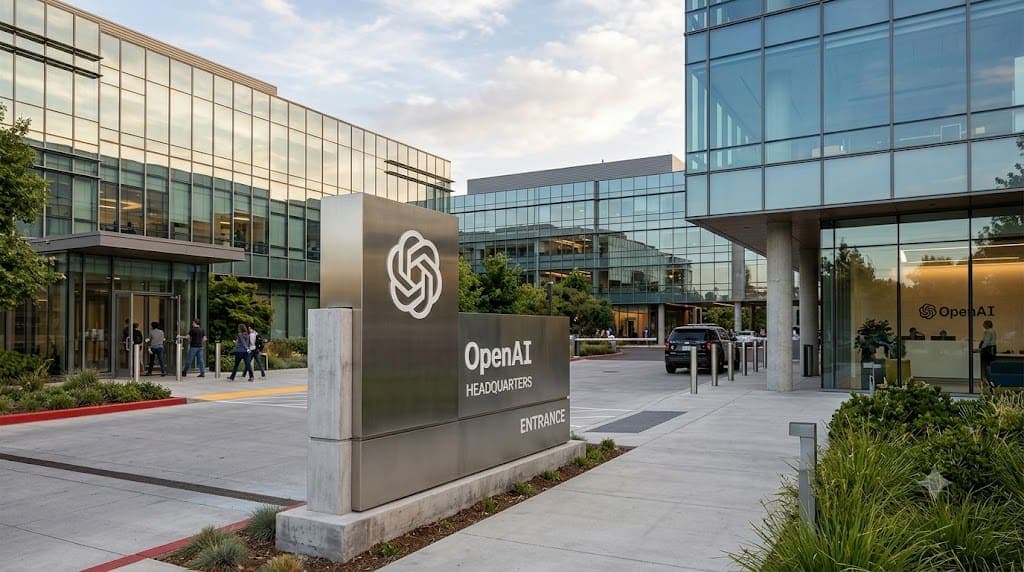
Shares of Nvidia, Oracle, CoreWeave, and several other AI-linked companies fell sharply on October 8 after a new report revealed that OpenAI's actual annualized revenue is significantly lower than the figure that had been widely circulating in the market.
What Happened
CNBC confirmed that OpenAI informed investors its annualized revenue run rate stood at roughly $50 billion as of late September, nearly $20 billion below the $68 billion figure reported just weeks earlier. The Financial Times was first to break the corrected number.
According to a person familiar with the matter, the earlier $68 billion calculation bundled in gross revenue generated from OpenAI's partners, which inflated the figure relative to standard accounting definitions. Adjusting the metric to a standalone $50 billion run rate allows investors to draw an accurate, apples-to-apples comparison with OpenAI's key rival, Anthropic.
How the Market Reacted
The disclosure prompted a broad sell-off across AI infrastructure and semiconductor equities:
- CoreWeave dropped nearly 8%
- Oracle fell over 5%, driven by investor sensitivity around its massive multi-billion cloud infrastructure commitments with OpenAI
- Nvidia slid close to 3%
- Intel and Super Micro Computer shed between 5% and 6% each
- AMD and Broadcom slipped 4% to 5%
The pullback mirrored broader pressures across high-multiple tech names, where macroeconomic friction and enterprise software scrutiny continue to intersect with shifting tech talent policies—including recent US green card processing suspensions impacting major tech employers. The Nasdaq declined 1.4% during the session, and the risk-off sentiment spilled into Asian tech bourses overnight.
OpenAI's Financial Picture
Despite the headline adjustment, OpenAI's internal disclosures were not entirely downbeat. The company highlighted that its third-quarter run-rate revenue expanded 77% across its consolidated business, powered by a 107% surge in enterprise adoption. Sales to business clients have more than doubled since July.
OpenAI remains heavily backed following its historic $122 billion financing round closed in March, which pegged its valuation at $852 billion. Speaking to CNBC, Chief Financial Officer Sarah Friar affirmed that the balance sheet remains exceptionally well-capitalized. However, the cost of scaling frontier intelligence remains enormous: the company logged a net loss of $38.5 billion in 2025 on $13.07 billion in top-line revenue, reflecting massive capital deployment into model training, custom silicon, and cloud cluster capacity.
The Infrastructure Exposure Problem
This episode underscores just how sensitive the global AI supply chain is to OpenAI's operational milestones. When revenue metrics for a single private entity swing by $20 billion, that delta cascades across chip design houses, hyperscalers, and private GPU cloud providers within hours.
Oracle’s market reaction highlights this concentrated exposure: a substantial slice of its forward cloud backlog is linked to contracts supporting OpenAI workloads. If frontier lab monetization decelerates or takes longer to match compute outlays, capital expenditures across the data center ecosystem will face intense margin scrutiny.
Frequently Asked Questions
Why did Nvidia, Oracle, and CoreWeave stocks drop?
OpenAI informed investors that its annualized revenue run rate was approximately $50 billion—down from earlier market reports of $68 billion—prompting traders to reassess near-term AI infrastructure demand.
Is OpenAI in immediate financial trouble?
No. The company retains significant liquidity following its $122 billion round in March and is demonstrating rapid operational growth, with enterprise revenue doubling since mid-year despite high underlying compute losses.
Why was the $68 billion figure adjusted?
The preliminary $68 billion estimate improperly incorporated gross revenues from partner ecosystems rather than OpenAI's isolated run-rate revenues.
Which assets saw the sharpest reaction?
CoreWeave slid almost 8%, Oracle declined over 5%, and hardware peers including Nvidia, AMD, Broadcom, Intel, and Super Micro Computer fell between 3% and 6%.
A single $20 billion adjustments at the center of the AI ecosystem wiped out billions in public market capitalization in a single trading session. Whether this retreat marks a brief repricing or a deeper structural reset will depend on how cloud providers and chipmakers guide capital expenditures in their upcoming earnings releases.
Sources: CNBC, Financial Times, Quartz, Benzinga, GuruFocus. Information is accurate as of October 9, 2026.
Stay ahead of artificial intelligence & systems code.
One email a week with the biggest AI and dev news. No spam. Unsubscribe anytime.